http://example.com/foo/bar)'),
'proto-rel' => t('Protocol relative URL (//example.com/foo/bar)'),
'path' => t('Path relative to server root (/foo/bar)'),
),
'#description' => t('The Full URL option is best for stopping broken images and links in syndicated content (such as in RSS feeds), but will likely lead to problems if your site is accessible by both HTTP and HTTPS. Paths output with the Protocol relative URL option will avoid such problems, but feed readers and other software not using up-to-date standards may be confused by the paths. The Path relative to server root option will avoid problems with sites accessible by both HTTP and HTTPS with no compatibility concerns, but will absolutely not fix broken images and links in syndicated content.'),
'#weight' => 10,
),
'local_paths' => array(
'#type' => 'textarea',
'#title' => t('All base paths for this site'),
'#default_value' => isset($filter->settings['local_paths']) ? $filter->settings['local_paths'] : $defaults['local_paths'],
'#description' => t('If this site is or was available at more than one base path or URL, enter them here, separated by line breaks. For example, if this site is live at http://example.com/ but has a staging version at http://dev.example.org/staging/, you would enter both those URLs here. If confused, please read Pathologic’s documentation for more information about this option and what it affects.', array('!docs' => 'http://drupal.org/node/257026')),
'#weight' => 20,
),
);
}
/**
* Pathologic filter callback.
*
* Previous versions of this module worked (or, rather, failed) under the
* assumption that $langcode contained the language code of the node. Sadly,
* this isn't the case.
* @see http://drupal.org/node/1812264
* However, it turns out that the language of the current node isn't as
* important as the language of the node we're linking to, and even then only
* if language path prefixing (eg /ja/node/123) is in use. REMEMBER THIS IN THE
* FUTURE, ALBRIGHT.
*
* The below code uses the @ operator before parse_url() calls because in PHP
* 5.3.2 and earlier, parse_url() causes a warning of parsing fails. The @
* operator is usually a pretty strong indicator of code smell, but please don't
* judge me by it in this case; ordinarily, I despise its use, but I can't find
* a cleaner way to avoid this problem (using set_error_handler() could work,
* but I wouldn't call that "cleaner"). Fortunately, Drupal 8 will require at
* least PHP 5.3.5, so this mess doesn't have to spread into the D8 branch of
* Pathologic.
* @see https://drupal.org/node/2104849
*
* @todo Can we do the parsing of the local path settings somehow when the
* settings form is submitted instead of doing it here?
*/
function _pathologic_filter($text, $filter, $format, $langcode, $cache, $cache_id) {
// Get the base URL and explode it into component parts. We add these parts
// to the exploded local paths settings later.
global $base_url;
$base_url_parts = @parse_url($base_url . '/');
// Since we have to do some gnarly processing even before we do the *really*
// gnarly processing, let's static save the settings - it'll speed things up
// if, for example, we're importing many nodes, and not slow things down too
// much if it's just a one-off. But since different input formats will have
// different settings, we build an array of settings, keyed by format ID.
$cached_settings = &drupal_static(__FUNCTION__, array());
if (!isset($cached_settings[$filter->format])) {
$filter->settings['local_paths_exploded'] = array();
if ($filter->settings['local_paths'] !== '') {
// Build an array of the exploded local paths for this format's settings.
// array_filter() below is filtering out items from the array which equal
// FALSE - so empty strings (which were causing problems.
// @see http://drupal.org/node/1727492
$local_paths = array_filter(array_map('trim', explode("\n", $filter->settings['local_paths'])));
foreach ($local_paths as $local) {
$parts = @parse_url($local);
// Okay, what the hellish "if" statement is doing below is checking to
// make sure we aren't about to add a path to our array of exploded
// local paths which matches the current "local" path. We consider it
// not a match, if…
// @todo: This is pretty horrible. Can this be simplified?
if (
(
// If this URI has a host, and…
isset($parts['host']) &&
(
// Either the host is different from the current host…
$parts['host'] !== $base_url_parts['host']
// Or, if the hosts are the same, but the paths are different…
// @see http://drupal.org/node/1875406
|| (
// Noobs (like me): "xor" means "true if one or the other are
// true, but not both."
(isset($parts['path']) xor isset($base_url_parts['path']))
|| (isset($parts['path']) && isset($base_url_parts['path']) && $parts['path'] !== $base_url_parts['path'])
)
)
) ||
// Or…
(
// The URI doesn't have a host…
!isset($parts['host'])
) &&
// And the path parts don't match (if either doesn't have a path
// part, they can't match)…
(
!isset($parts['path']) ||
!isset($base_url_parts['path']) ||
$parts['path'] !== $base_url_parts['path']
)
) {
// Add it to the list.
$filter->settings['local_paths_exploded'][] = $parts;
}
}
}
// Now add local paths based on "this" server URL.
$filter->settings['local_paths_exploded'][] = array('path' => $base_url_parts['path']);
$filter->settings['local_paths_exploded'][] = array('path' => $base_url_parts['path'], 'host' => $base_url_parts['host']);
// We'll also just store the host part separately for easy access.
$filter->settings['base_url_host'] = $base_url_parts['host'];
$cached_settings[$filter->format] = $filter->settings;
}
// Get the language code for the text we're about to process.
$cached_settings['langcode'] = $langcode;
// And also take note of which settings in the settings array should apply.
$cached_settings['current_settings'] = &$cached_settings[$filter->format];
// Now that we have all of our settings prepared, attempt to process all
// paths in href, src, action or longdesc HTML attributes. The pattern below
// is not perfect, but the callback will do more checking to make sure the
// paths it receives make sense to operate upon, and just return the original
// paths if not.
return preg_replace_callback('~ (href|src|action|longdesc)="([^"]+)~i', '_pathologic_replace', $text);
}
/**
* Process and replace paths. preg_replace_callback() callback.
*/
function _pathologic_replace($matches) {
// Get the base path.
global $base_path;
// Get the settings for the filter. Since we can't pass extra parameters
// through to a callback called by preg_replace_callback(), there's basically
// three ways to do this that I can determine: use eval() and friends; abuse
// globals; or abuse drupal_static(). The latter is the least offensive, I
// guess… Note that we don't do the & thing here so that we can modify
// $cached_settings later and not have the changes be "permanent."
$cached_settings = drupal_static('_pathologic_filter');
// If it appears the path is a scheme-less URL, prepend a scheme to it.
// parse_url() cannot properly parse scheme-less URLs. Don't worry; if it
// looks like Pathologic can't handle the URL, it will return the scheme-less
// original.
// @see https://drupal.org/node/1617944
// @see https://drupal.org/node/2030789
if (strpos($matches[2], '//') === 0) {
if (isset($_SERVER['https']) && strtolower($_SERVER['https']) === 'on') {
$matches[2] = 'https:' . $matches[2];
}
else {
$matches[2] = 'http:' . $matches[2];
}
}
// Now parse the URL after reverting HTML character encoding.
// @see http://drupal.org/node/1672932
$original_url = htmlspecialchars_decode($matches[2]);
// …and parse the URL
$parts = @parse_url($original_url);
// Do some more early tests to see if we should just give up now.
if (
// If parse_url() failed, give up.
$parts === FALSE
|| (
// If there's a scheme part and it doesn't look useful, bail out.
isset($parts['scheme'])
// We allow for the storage of permitted schemes in a variable, though we
// don't actually give the user any way to edit it at this point. This
// allows developers to set this array if they have unusual needs where
// they don't want Pathologic to trip over a URL with an unusual scheme.
// @see http://drupal.org/node/1834308
// "files" and "internal" are for Path Filter compatibility.
&& !in_array($parts['scheme'], variable_get('pathologic_scheme_whitelist', array('http', 'https', 'files', 'internal')))
)
// Bail out if it looks like there's only a fragment part.
|| (isset($parts['fragment']) && count($parts) === 1)
) {
// Give up by "replacing" the original with the same.
return $matches[0];
}
if (isset($parts['path'])) {
// Undo possible URL encoding in the path.
// @see http://drupal.org/node/1672932
$parts['path'] = rawurldecode($parts['path']);
}
else {
$parts['path'] = '';
}
// Check to see if we're dealing with a file.
// @todo Should we still try to do path correction on these files too?
if (isset($parts['scheme']) && $parts['scheme'] === 'files') {
// Path Filter "files:" support. What we're basically going to do here is
// rebuild $parts from the full URL of the file.
$new_parts = @parse_url(file_create_url(file_default_scheme() . '://' . $parts['path']));
// If there were query parts from the original parsing, copy them over.
if (!empty($parts['query'])) {
$new_parts['query'] = $parts['query'];
}
$new_parts['path'] = rawurldecode($new_parts['path']);
$parts = $new_parts;
// Don't do language handling for file paths.
$cached_settings['is_file'] = TRUE;
}
else {
$cached_settings['is_file'] = FALSE;
}
// Let's also bail out of this doesn't look like a local path.
$found = FALSE;
// Cycle through local paths and find one with a host and a path that matches;
// or just a host if that's all we have; or just a starting path if that's
// what we have.
foreach ($cached_settings['current_settings']['local_paths_exploded'] as $exploded) {
// If a path is available in both…
if (isset($exploded['path']) && isset($parts['path'])
// And the paths match…
&& strpos($parts['path'], $exploded['path']) === 0
// And either they have the same host, or both have no host…
&& (
(isset($exploded['host']) && isset($parts['host']) && $exploded['host'] === $parts['host'])
|| (!isset($exploded['host']) && !isset($parts['host']))
)
) {
// Remove the shared path from the path. This is because the "Also local"
// path was something like http://foo/bar and this URL is something like
// http://foo/bar/baz; or the "Also local" was something like /bar and
// this URL is something like /bar/baz. And we only care about the /baz
// part.
$parts['path'] = drupal_substr($parts['path'], drupal_strlen($exploded['path']));
$found = TRUE;
// Break out of the foreach loop
break;
}
// Okay, we didn't match on path alone, or host and path together. Can we
// match on just host? Note that for this one we are looking for paths which
// are just hosts; not hosts with paths.
elseif ((isset($parts['host']) && !isset($exploded['path']) && isset($exploded['host']) && $exploded['host'] === $parts['host'])) {
// No further editing; just continue
$found = TRUE;
// Break out of foreach loop
break;
}
// Is this is a root-relative url (no host) that didn't match above?
// Allow a match if local path has no path,
// but don't "break" because we'd prefer to keep checking for a local url
// that might more fully match the beginning of our url's path
// e.g.: if our url is /foo/bar we'll mark this as a match for
// http://example.com but want to keep searching and would prefer a match
// to http://example.com/foo if that's configured as a local path
elseif (!isset($parts['host']) && (!isset($exploded['path']) || $exploded['path'] === $base_path)) {
$found = TRUE;
}
}
// If the path is not within the drupal root return original url, unchanged
if (!$found) {
return $matches[0];
}
// Okay, format the URL.
// If there's still a slash lingering at the start of the path, chop it off.
$parts['path'] = ltrim($parts['path'],'/');
// Examine the query part of the URL. Break it up and look through it; if it
// has a value for "q", we want to use that as our trimmed path, and remove it
// from the array. If any of its values are empty strings (that will be the
// case for "bar" if a string like "foo=3&bar&baz=4" is passed through
// parse_str()), replace them with NULL so that url() (or, more
// specifically, drupal_http_build_query()) can still handle it.
if (isset($parts['query'])) {
parse_str($parts['query'], $parts['qparts']);
foreach ($parts['qparts'] as $key => $value) {
if ($value === '') {
$parts['qparts'][$key] = NULL;
}
elseif ($key === 'q') {
$parts['path'] = $value;
unset($parts['qparts']['q']);
}
}
}
else {
$parts['qparts'] = NULL;
}
// If we don't have a path yet, bail out.
if (!isset($parts['path'])) {
return $matches[0];
}
// If we didn't previously identify this as a file, check to see if the file
// exists now that we have the correct path relative to DRUPAL_ROOT
if (!$cached_settings['is_file']) {
$cached_settings['is_file'] = !empty($parts['path']) && is_file(DRUPAL_ROOT . '/'. $parts['path']);
}
// Okay, deal with language stuff.
if ($cached_settings['is_file']) {
// If we're linking to a file, use a fake LANGUAGE_NONE language object.
// Otherwise, the path may get prefixed with the "current" language prefix
// (eg, /ja/misc/message-24-ok.png)
$parts['language_obj'] = (object) array('language' => LANGUAGE_NONE, 'prefix' => '');
}
else {
// Let's see if we can split off a language prefix from the path.
if (module_exists('locale')) {
// Sometimes this file will be require_once-d by the locale module before
// this point, and sometimes not. We require_once it ourselves to be sure.
require_once DRUPAL_ROOT . '/includes/language.inc';
list($language_obj, $path) = language_url_split_prefix($parts['path'], language_list());
if ($language_obj) {
$parts['path'] = $path;
$parts['language_obj'] = $language_obj;
}
}
}
// If we get to this point and $parts['path'] is now an empty string (which
// will be the case if the path was originally just "/"), then we
// want to link to
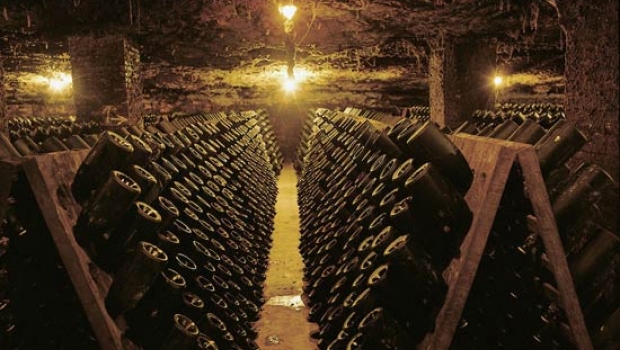
El Ateneo Agrícola, Can Guineu o La Fassina son algunos de los puntos que visitarás en la ruta teatralizada (6,30 euros) que propone el Ayuntamiento de Sant Sadurní para adentrarte en los secretos del cava. Pero, además de este viaje en el tiempo en el que Raül Mir –uno de los personajes que capitaneó la lucha contra la filoxera– te descubre los personajes de la época y el gran potencial económico que comenzó a vivir el cava, tienes otras propuestas para conocer a fondo esta población del Alt Penedès.
Para saborear los misterios de este caldo, acércate al Centro de Interpretación del Cava (CIC Fassina. Entrada: 6 euros), un espacio de 1.200 m2 sobre el mundo del cava –desde su elaboración hasta el ataque de la filoxera– a través de audiovisuales y 3D. O combínalo con una visita guiada a las Cavas Freixenet que incluye recorrido en tren eléctrico y degustaciones. Entrada combinada: 9,25 euros. Si estás en forma, alquila una bicicleta –en la Oficina de Turismo, desde 3,20 euros/h– y lánzate a recorrer la Ruta de las Cavas: 4,5 km aptos para todos entre edificios como el de las cavas de Raventós y Blanc o el de Codorníu. Modernismo entre vides Si además del espléndido paisaje de Montserrat y del río Anoia te han llamado la atención estas construcciones, apúntate a la Ruta Modernista (el último sábado de cada mes. Entrada: 10,75 euros). En este paseo, que parte del Ayuntamiento, te sorprenderá el diseño de muchas fachadas, algunas firmadas por arquitectos como Puig i Cadalfach o Miquel Madurell i Rius. Son la prueba viviente del productivo tándem que vivieron los empresarios vinícolas y los arquitectos catalanes, que seguían la onda modernista que imperaba en Europa. A 1 km, termina la visita en las cavas Codorníu, una joya del modernismo catalán. ¡Hummmmmm! Esto es lo primero que sentirás cuando pruebes los chocolates de Simón Coll, que, como no, incluye especialidades con cava. Pon a punto tus sentidos y disfruta de este templo chocolatero, que ofrece visitas guiadas (5 euros) para conocer su elaboración. Nuestra guía
Toda la información de las bodegas más importantes a un solo click.
|
|
||
|
|

Siguenos en las principales redes sociales pulsando sobre la aplicacion que mas te guste.